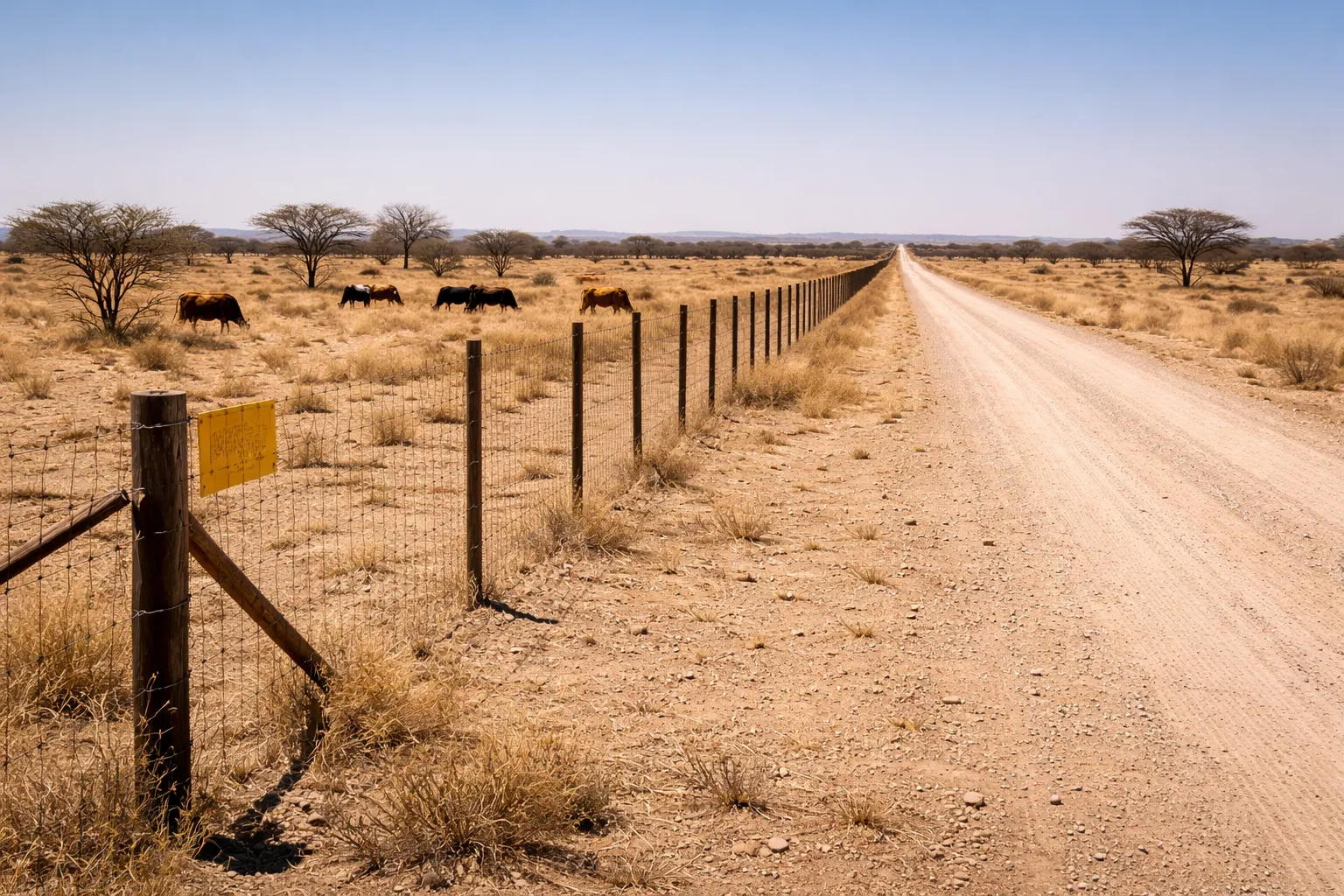
Redline Reactivated in the South After Foot-and-Mouth Outbreak
Namibia has reactivated the southern section of the veterinary cordon fence (the "redline") following a foot-and-mouth disease outbreak, triggering livestock movement restrictions and trade controls that will remain in place while the outbreak is contained.
The veterinary cordon fence has been one of the more contested pieces of Namibian agricultural infrastructure since independence. Originally established during the colonial era, the fence separates the commercial cattle-farming zones in the centre and south of the country from the communal farming areas in the north. The primary justification is animal health — specifically, access to premium export markets for Namibian beef that require disease-free status certifications impossible to achieve country-wide.
For communal farmers north of the fence, the structure has long been seen as a barrier to accessing the same markets, prices, and processing infrastructure available to commercial farmers south of the line. Movement of their cattle to southern abattoirs requires lengthy quarantine and certification processes that have historically been more barrier than enabler.
The current reactivation is disease-control rather than policy. A foot-and-mouth outbreak in the south has forced precautionary movement restrictions and heightened surveillance. Once the outbreak is clinically contained and surveillance confirms the area disease-free, standard commercial movements can resume.
The longer-term direction set out by the administration is to work with the World Organisation for Animal Health (WOAH) to progressively declare areas disease-free on the northern side of the cordon, which would over time erode the trade rationale for the fence. That process is slow by design — international disease-free recognition requires years of surveillance data — and will not deliver quick wins for the communal farming communities who are the most affected.
The political sensitivity of the cordon fence has not gone away. Discussions in parliament and civil society have continued on both the current outbreak response and the longer-term path to eventual removal.