What's on the National Assembly's 2026 Order Paper
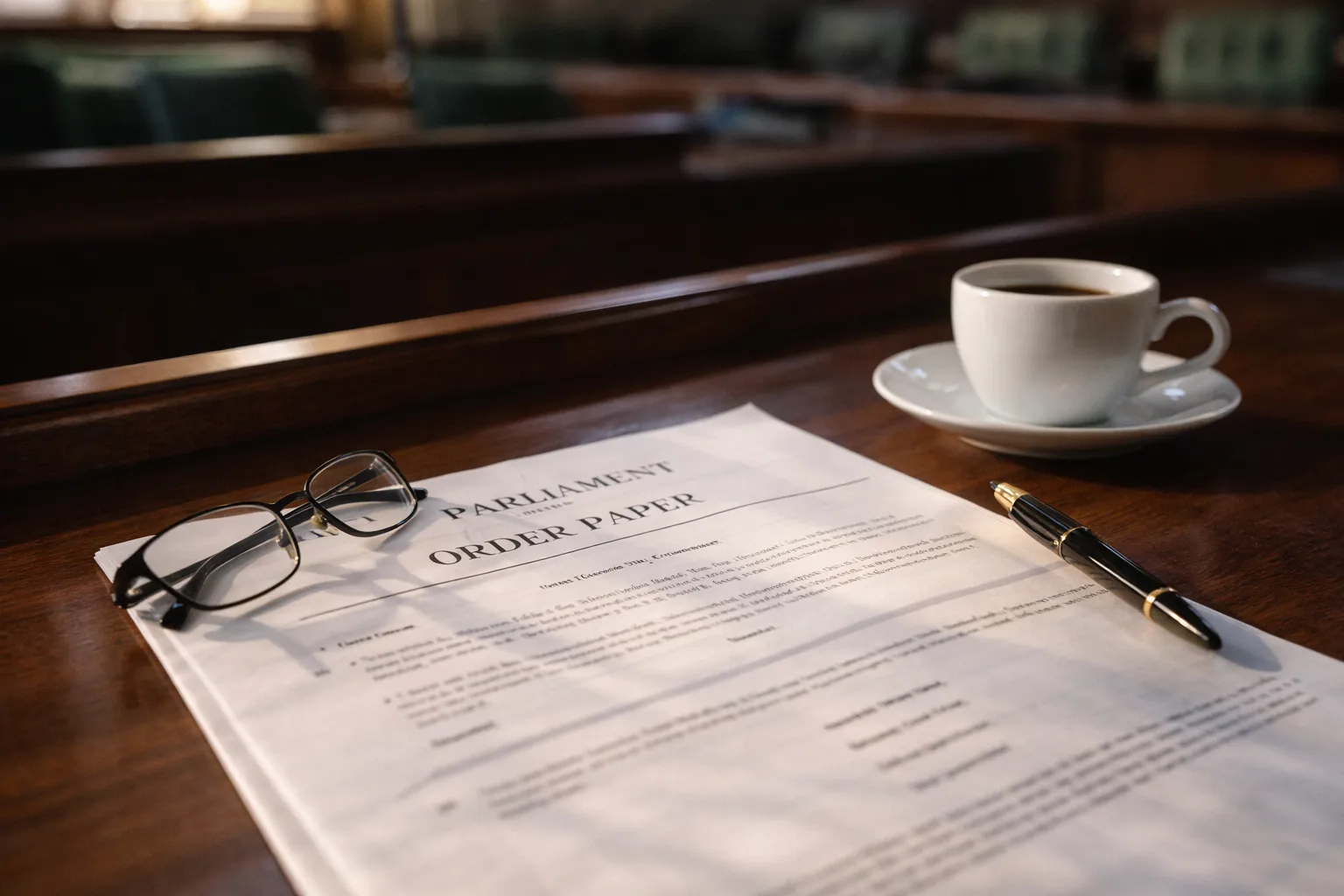
The National Assembly's 2026 order paper — the agenda of bills, motions, and committee business scheduled for the third session of the eighth Parliament — offers a clearer view of what the legislative year will actually produce than any single speech or policy announcement.
The headline items sit at the top of the paper. The appropriation bill is always the first major business of a new session, and the 2026 version will be closely read for the trade-offs between the free tertiary education rollout, infrastructure capital (notably the Windhoek-Rehoboth commuter rail allocation), and the recurring demands of the public service wage bill.
The Higher Education Amendment Bill is the enabling legislation for the tuition-free tertiary policy. It requires changes to funding flows, registration frameworks, and NSFAF operations. The Welwitschia Sovereign Wealth Fund Bill is the standalone statute creating the future fund as a separate legal entity with its own governance architecture.
Beyond the headline items, the order paper carries a substantial number of committee inquiries, standing committee reports, and motion debates. Parliamentary committees will examine topics including public procurement reform, the state of the Namibia National Reinsurance Corporation, progress on the ReCAP programme, and the Ministry of Finance's tax administration review.
Opposition motions currently on the paper include calls for a dedicated debate on youth unemployment, a review of the implementation of the Harambee Prosperity Plan, and a discussion of accountability mechanisms for state-owned enterprises. Several of these are expected to be debated rather than passed — motions are the mechanism by which MPs raise issues in the public record even without driving immediate legislative change.
The order paper is updated as the session progresses. A live version is published on the parliament.na website, and committee hearing schedules are available through the same portal. For observers and stakeholders, the practical value of the order paper is in flagging which bills are approaching committee stage, when public submission windows open, and which debates are scheduled in the weeks ahead.