Zambezi Region: Namibia's Water-Safari Secret
For a country defined globally by deserts, Namibia's Zambezi Region is a striking anomaly — a 450-kilometre-long strip of well-watered, tropical floodplain framed by four major rivers (the Zambezi, Chobe, Kwando, and Linyanti) and sitting at the meeting point of Namibia, Zambia, Botswana, Angola, and Zimbabwe.
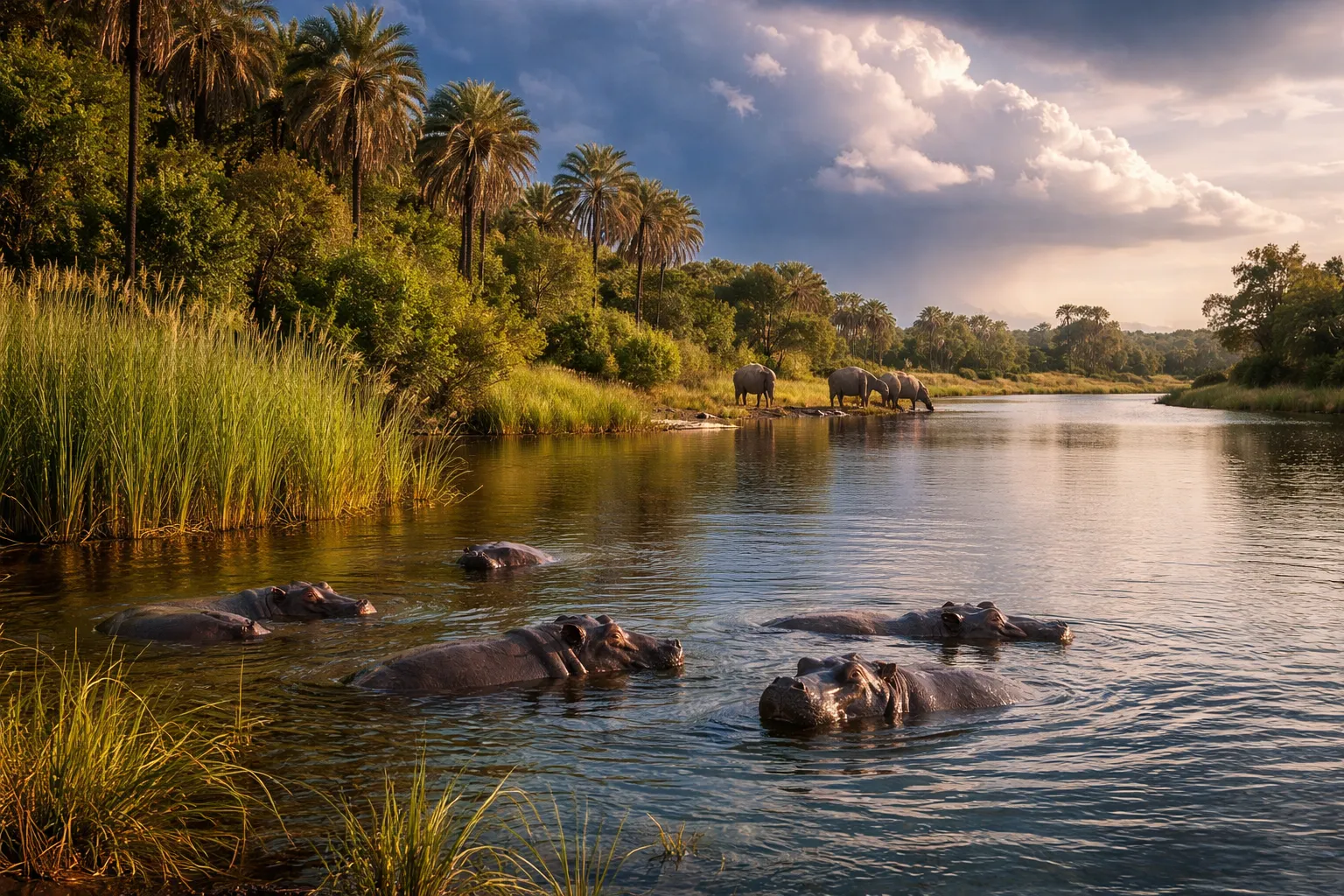
Where the rest of Namibia delivers arid desert wildlife, the Zambezi offers classic river safari: pods of hippos, crocodiles sunning on sandbanks, elephants crossing between islands, and some of the densest concentrations of buffalo in the region. The big cat sightings here are less predictable than Etosha but more rewarding when they come — lions hunting buffalo in the floodplain, leopards in the riverine forest.
Bwabwata National Park sits at the western end and was expanded substantially in MEFT's recent infrastructure programme, including upgraded patrol support and anti-poaching capacity. Mudumu and Nkasa Rupara protect the wetland heart of the region. Nkasa Rupara in particular floods seasonally to become one of southern Africa's largest wetlands — reachable only by 4×4 and boat in peak water.
The Zambezi is one of Africa's great freshwater fishing destinations, with tiger fish season running August to November. Birders will add easily 50+ species to a Namibia list they couldn't match anywhere else in the country — African skimmers, Pel's fishing owl, Schalow's turaco, and Slaty egrets among them.
Katima Mulilo is the regional capital and the obvious entry point, with scheduled flights from Windhoek several times a week. Self-drive from the rest of Namibia is an approximately 12-hour commitment from Windhoek — plan two nights in the region as an absolute minimum, ideally four or more to do it justice.