Sossusvlei & Deadvlei: A Photographer's Guide to Namibia's Iconic Dunes
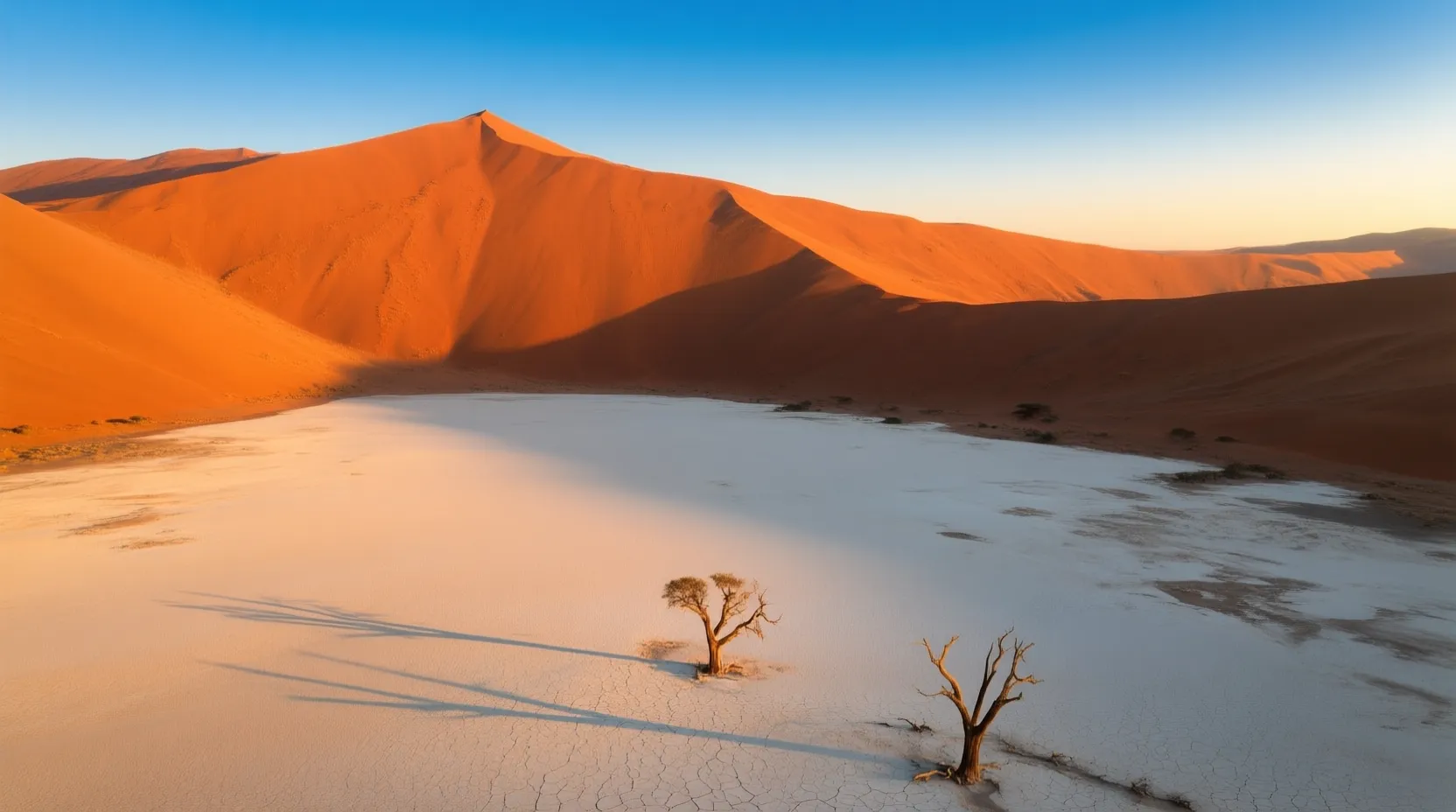
Few landscapes on Earth photograph as well as Sossusvlei and Deadvlei. Set deep in the Namib-Naukluft National Park, this pocket of fiery red dunes and bone-white clay pans has become one of the most photographed places in southern Africa — and for good reason.
The magic happens in the first and last 90 minutes of daylight. Outside that window, the dunes flatten out in harsh midday sun and the contrast you came for disappears. If you're serious about the shot, you need to be inside the park gate at Sesriem before sunrise, which means either overnighting at Sesriem Camp (inside the gate) or driving the hour from the outer gate well before dawn.
Dune 45 is the classic sunrise climb — roughly 170 metres high, accessible straight off the main road, and lined with the silhouettes of ancient camelthorn trees. Big Daddy, at around 325 metres, is a far more demanding climb from Deadvlei; the reward is a running descent down the dune face that drops you straight onto the white pan floor.
The cracked clay pan, ringed by rust-coloured dunes and dotted with 900-year-old blackened camelthorn skeletons, is reachable by a 1.1-kilometre walk from the 2×4 parking area (or a shorter hike from Sossusvlei proper if you have a 4×4). Go early. By 10am the light is gone and so is the sense of solitude.
Bring three litres of water per person, a wide-brim hat, and a dust-sealed camera body. Vehicles cannot drive all the way to Sossusvlei unless you're in a capable 4×4 — there's a shuttle service from the 2×4 lot that runs continuously during daylight hours.