Hiking Fish River Canyon: Namibia's Answer to the Grand Canyon
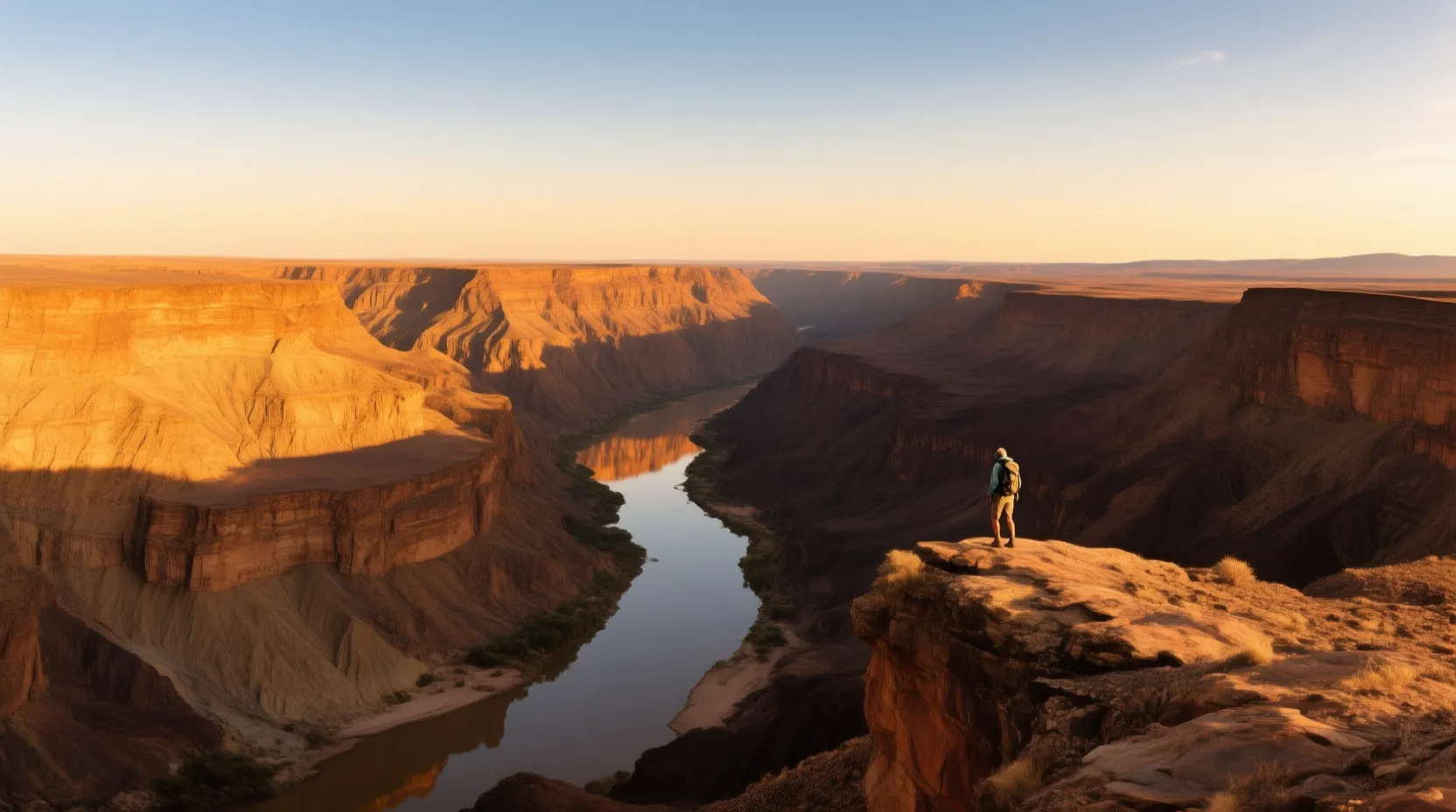
Fish River Canyon in southern Namibia is the second-largest canyon in the world, stretching roughly 160 kilometres long, 27 kilometres wide at its most expansive, and plunging up to 550 metres deep. For hikers, it's one of Africa's most serious multi-day wilderness challenges.
The full Fish River Canyon hike runs 85 kilometres from Hobas in the north to Ai-Ais at the southern end, typically completed in four to five days. There are no marked paths, no huts, no rescue facilities, and no cell reception for the vast majority of the route. You carry everything you need on your back, sleep rough on sand and gravel, and navigate by landscape.
The trail is only open from 1 May to 15 September — outside these months the summer heat (regularly 40°C+) and flash flood risk make it genuinely dangerous. Permits are issued by MEFT and numbers are strictly capped; book months in advance. A doctor's certificate of fitness issued within 40 days of the hike is mandatory.
The first day drops you nearly 500 metres down a steep scree slope into the canyon. From there the trail follows the riverbed, crossing and re-crossing the water dozens of times. Pools range from knee-deep to chest-deep; good waterproofing for your pack is essential. Days three and four feature the famous "short cuts" — brutal boulder scrambles that shave kilometres off the route at the cost of considerable knee punishment.
The end of the trail is the hot springs at Ai-Ais. After five days in the canyon, soaking in warm mineral water with a cold drink in your hand is one of the more memorable experiences on the African continent.
For travellers who want the view without the endurance test, the Hobas and Hell's Bend viewpoints offer some of the most spectacular canyon panoramas in the world — accessible by car in under 20 minutes from the main road.