Damaraland's Desert Elephants: How to See Them Responsibly
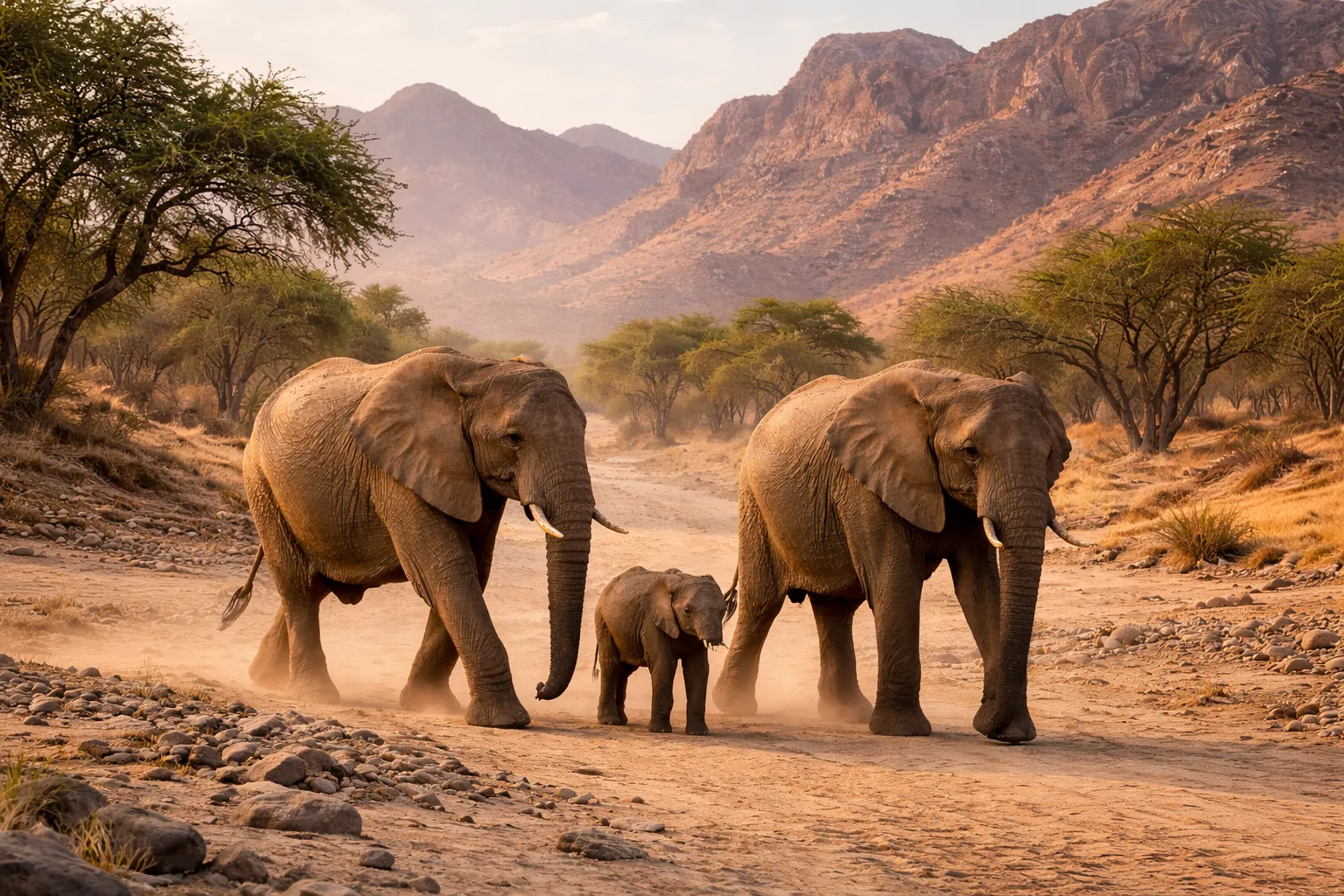
Damaraland, in Namibia's rugged north-west, is home to one of only two populations of desert-adapted elephants on Earth. These aren't a separate species — they're African savanna elephants that, over generations, have learned to survive in one of the most arid landscapes large mammals inhabit anywhere.
Desert elephants travel enormous distances between water sources — often 60 kilometres or more in a single day. Their feet are visibly larger and more splayed than their savanna cousins', an adaptation to soft sand. Herds are smaller, typically four to eight individuals, and they feed on surprisingly little: mopane leaves, ana tree pods, and grass along ephemeral riverbeds.
The Huab, Aba-Huab, Ugab, and Hoanib riverbeds are the classic tracking routes. Doro !Nawas, Hoanib Skeleton Coast Camp, and Huab Under Canvas are among the best-positioned lodges, all running guided tracking excursions with specialist guides.
Desert elephants are stressed by poor vehicle behaviour in ways savanna populations aren't — water is scarce, calves are vulnerable, and these herds have specific cultural memory of routes and wells. Stay 50 metres or more behind the herd when following, never drive between family groups, and never between an elephant and a water source. If a matriarch turns to face you, you're too close.
Desert elephant conservation is funded substantially by tourism revenue — concession fees, lodge levies, and community conservancy payments. The elephants you see in Damaraland are there in part because tourism made them worth more alive than as trophies. Every properly-booked safari helps keep that equation holding.