Osino's Twin Hills Gold Project Targets First Production in 2026
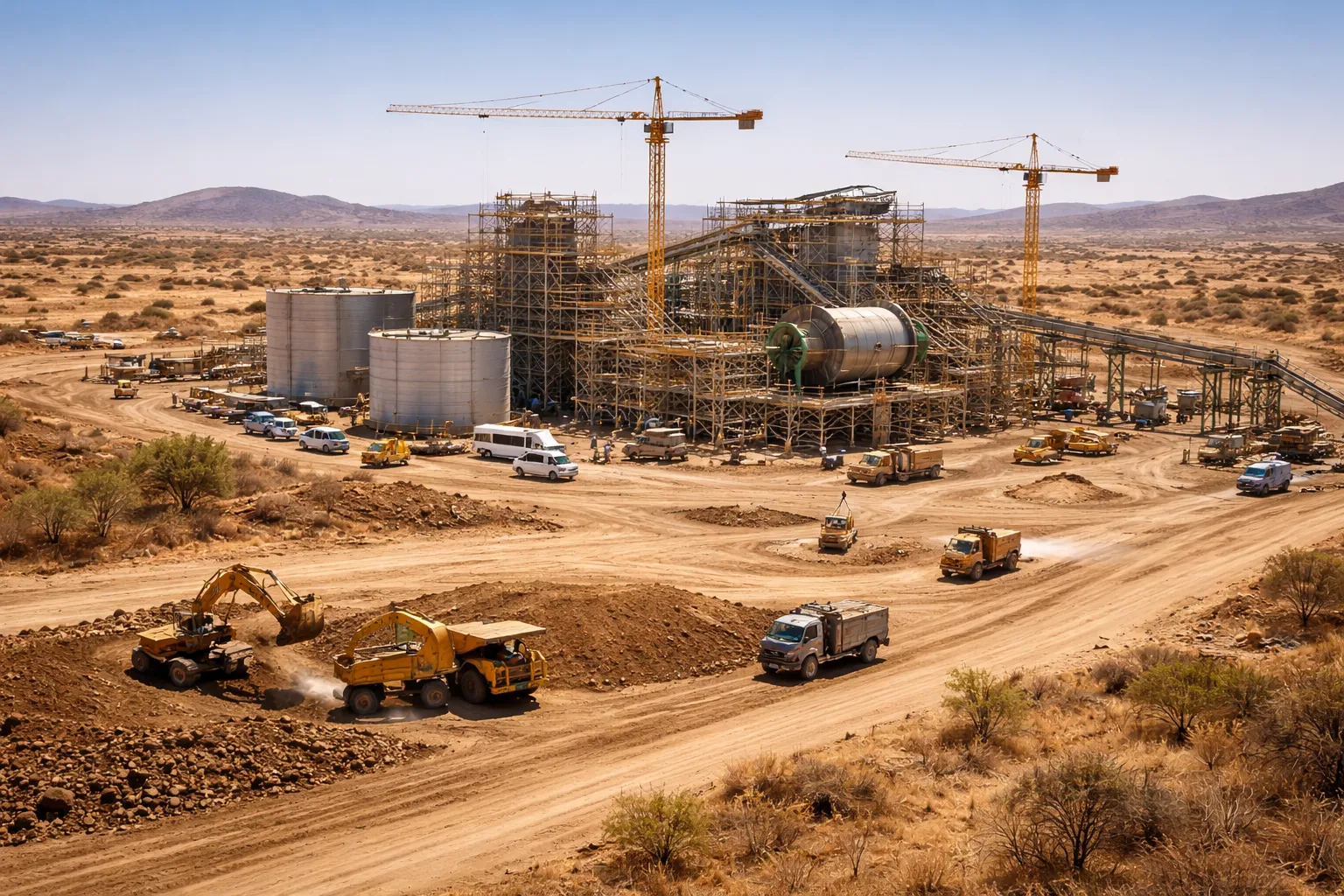
Osino Resources' Twin Hills gold project near Karibib in Otjozondjupa is in the construction phase and is targeting first gold production inside the 2026–27 window, adding a new gold producer to Namibia's mining landscape.
Twin Hills is a sizeable project by Namibian standards. The feasibility study put reserves at around 2.1 million ounces of contained gold across a mine life of more than ten years, with an annual production profile averaging close to 170,000 ounces once the operation reaches steady state.
Osino was acquired by Chinese gold producer Yintai Gold in 2024, a transaction that shifted the ownership but kept the project on its development path. Construction has been proceeding on schedule through 2025 and into early 2026, and the pacing items now are processing plant commissioning and grid connection — both routine for a project of this maturity.
For Otjozondjupa, Twin Hills represents a second major gold operation alongside B2Gold's Otjikoto. The project creates roughly 1,000 construction jobs and around 500 permanent positions at steady state, and will be one of the larger individual private-sector employers in the region.
The location near Karibib gives the project good logistics access via the Trans-Namib rail and the B2 trunk road to Walvis Bay. Water is supplied through a combination of borehole fields and piped water from NamWater, with the water balance sized for peak processing requirements through the plan.
The broader context is helpful: gold pricing has been strong throughout 2025 and into 2026, and the project's economics look healthier now than they did during final feasibility. For Namibia, the addition of Twin Hills pushes national gold output materially higher and diversifies the country's mining mix further away from diamonds — a trend that has been building for much of the past decade.